
How to start developing your own game
Sooner or later, many people from various fields come to the idea: Why not make my own game? Read on to start your project.
1. Title slide
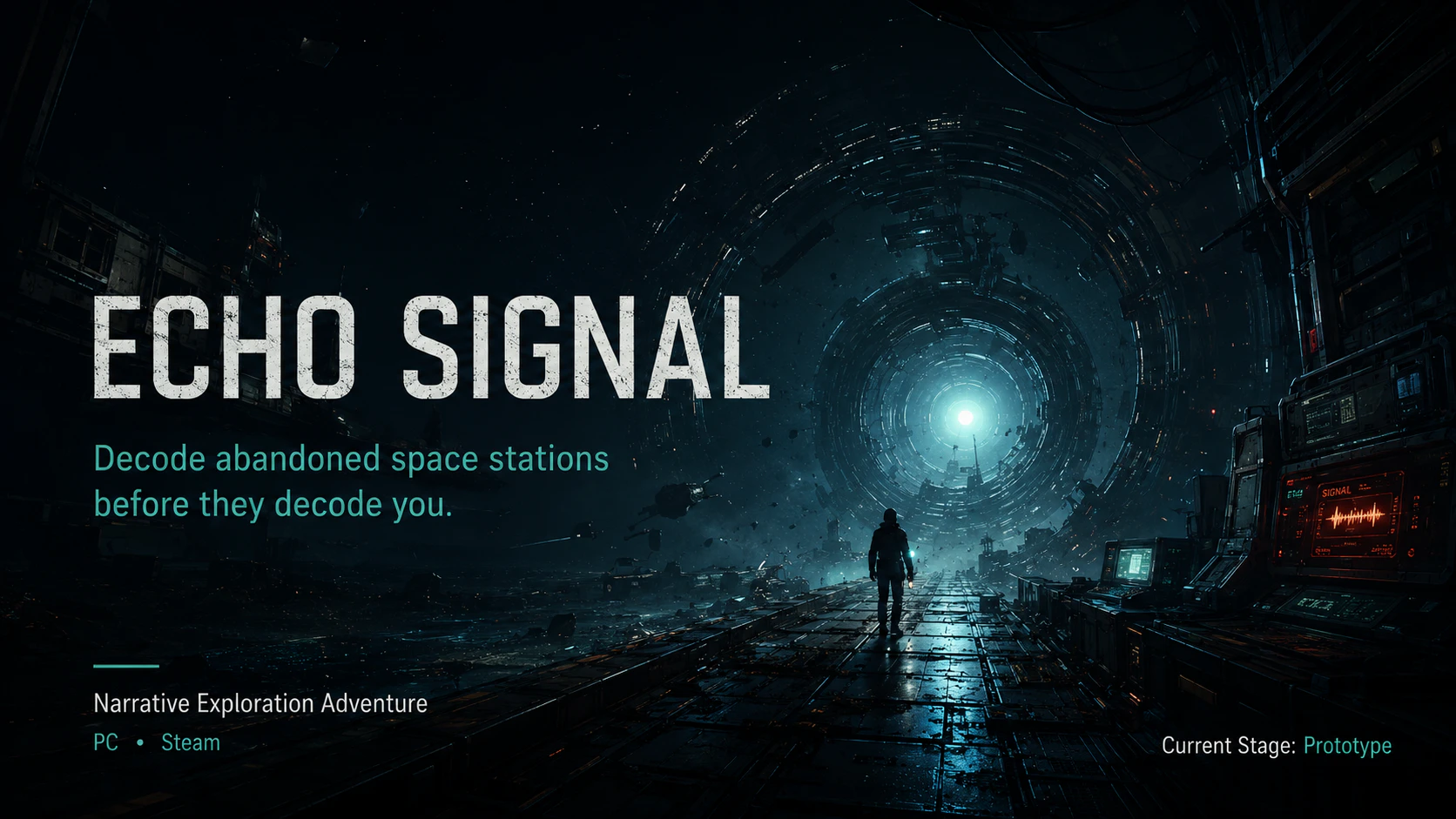
Introduces the project you are about to talk about. What to include:- Working title of the project
- An illustration that best captures the essence of the project
- A tagline — a short phrase that describes the core of your game
2. About yourself
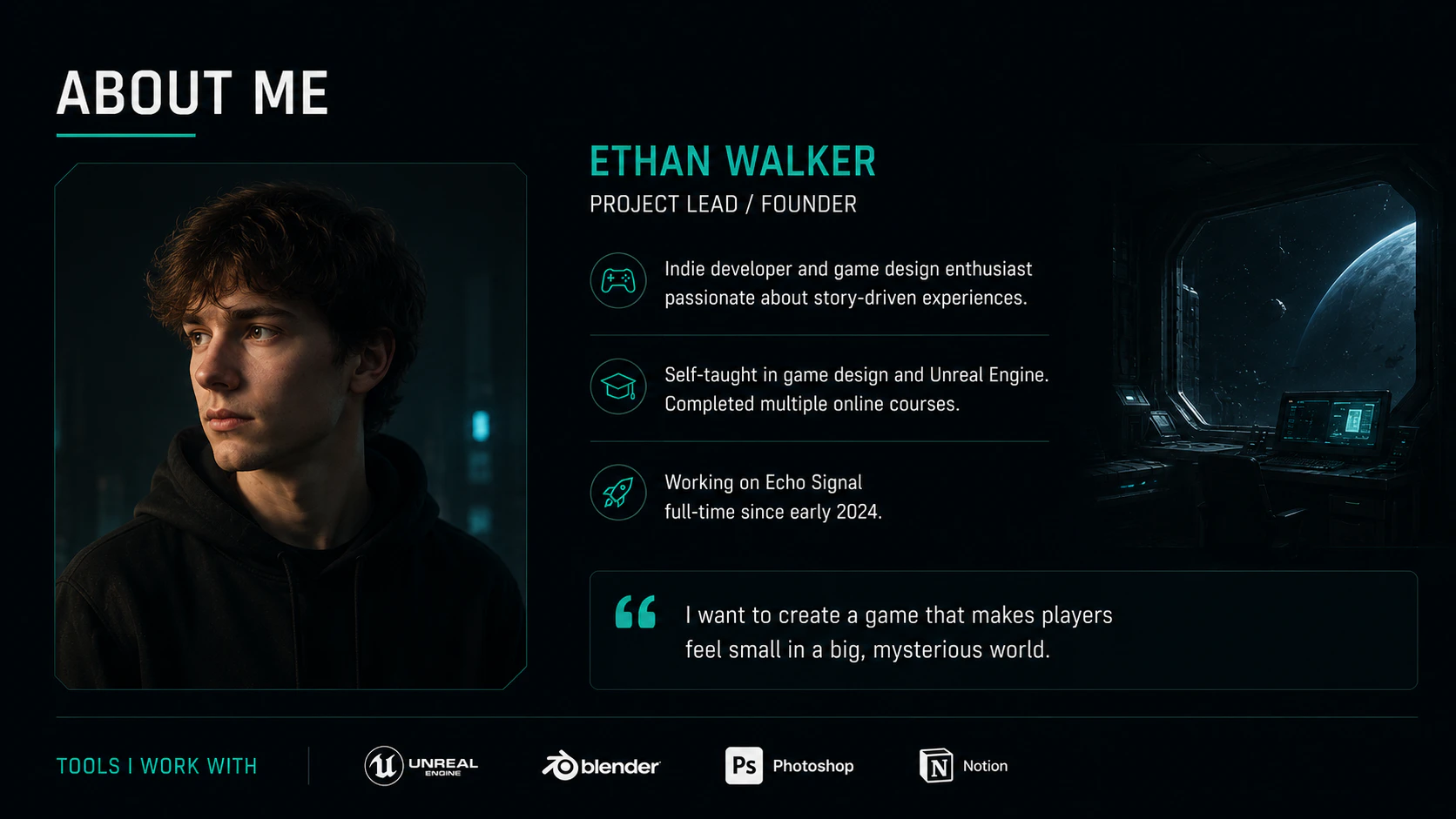
Introduce yourself — the project author and the future team lead. A lot depends on how you talk about your project and your experience, because that is what a given specialist will weigh when deciding whether to join you. What to include:- Name
- Photo
- Your game development experience (where you worked, where you studied, which projects you took part in)
- Your experience related to the core theme of the project. For example: “I worked as a doctor for 20 years, and now I’m making a game about a hospital.”
3. Key project information
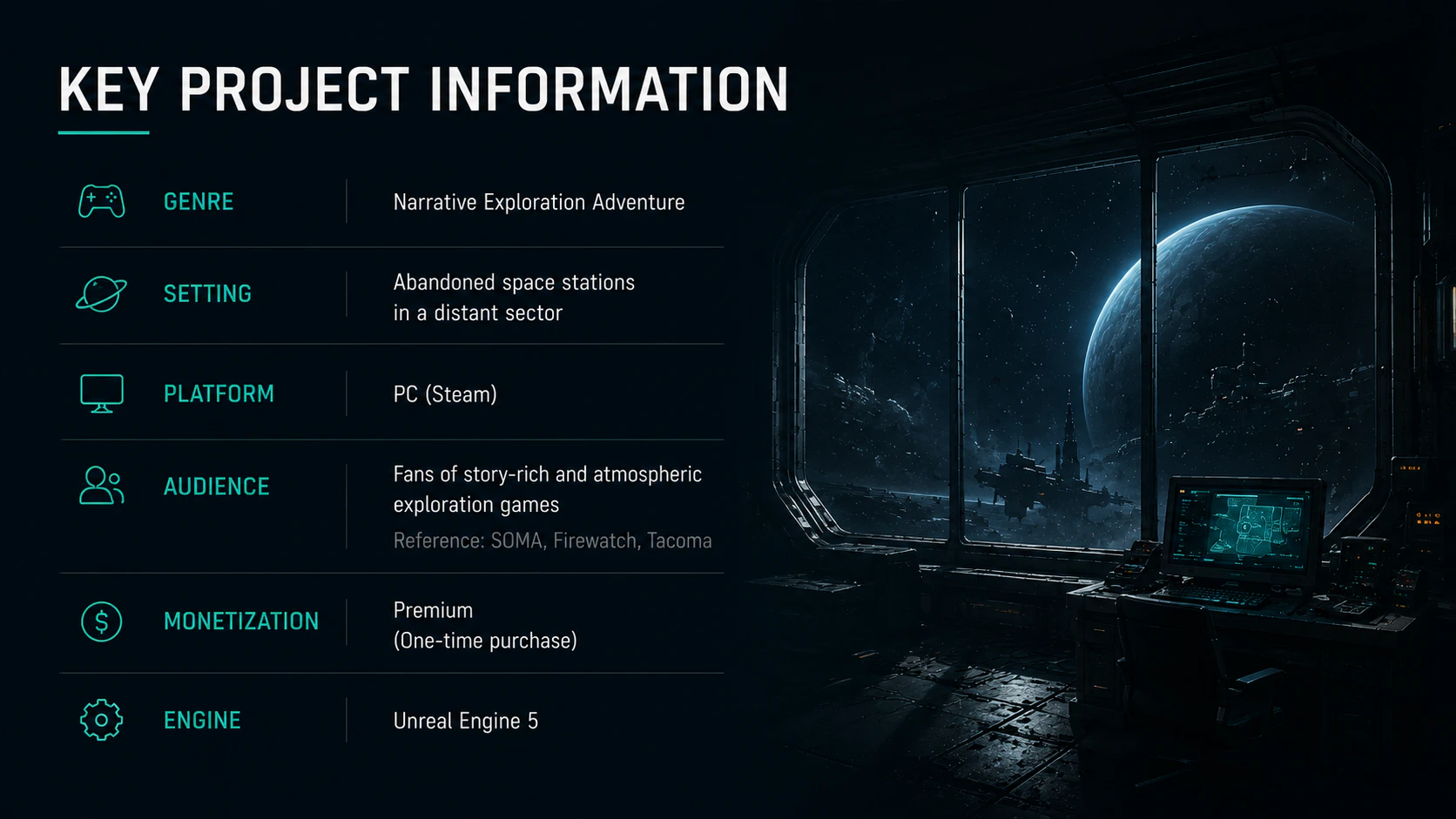
What to include:- Genre
- Setting
- Platform (PC, console, mobile, etc.)
- Audience
- Monetization — how the game will make money
- Game engine (if relevant)
4. What the game is about
A brief description of the gameplay. How does the game actually play?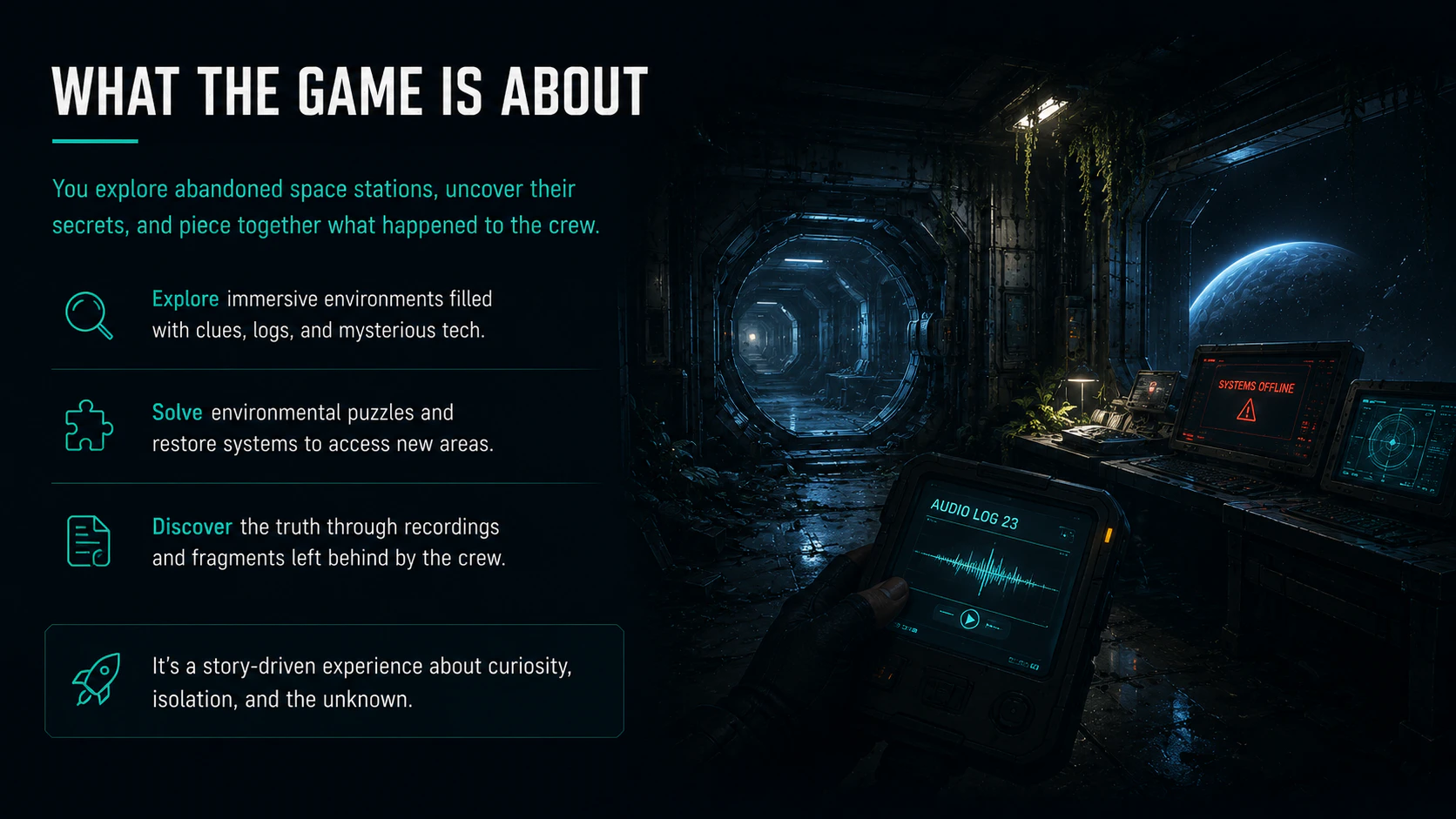
5. Project features (USP)
A list of the key features — what makes your game stand out, and where its fun comes from. Show up to 3 USPs. Among them, highlight a single hook — the one thing players will remember when they describe your game to others: “Oh, that’s the game where…”. There should be exactly one hook, and it should be unmistakable.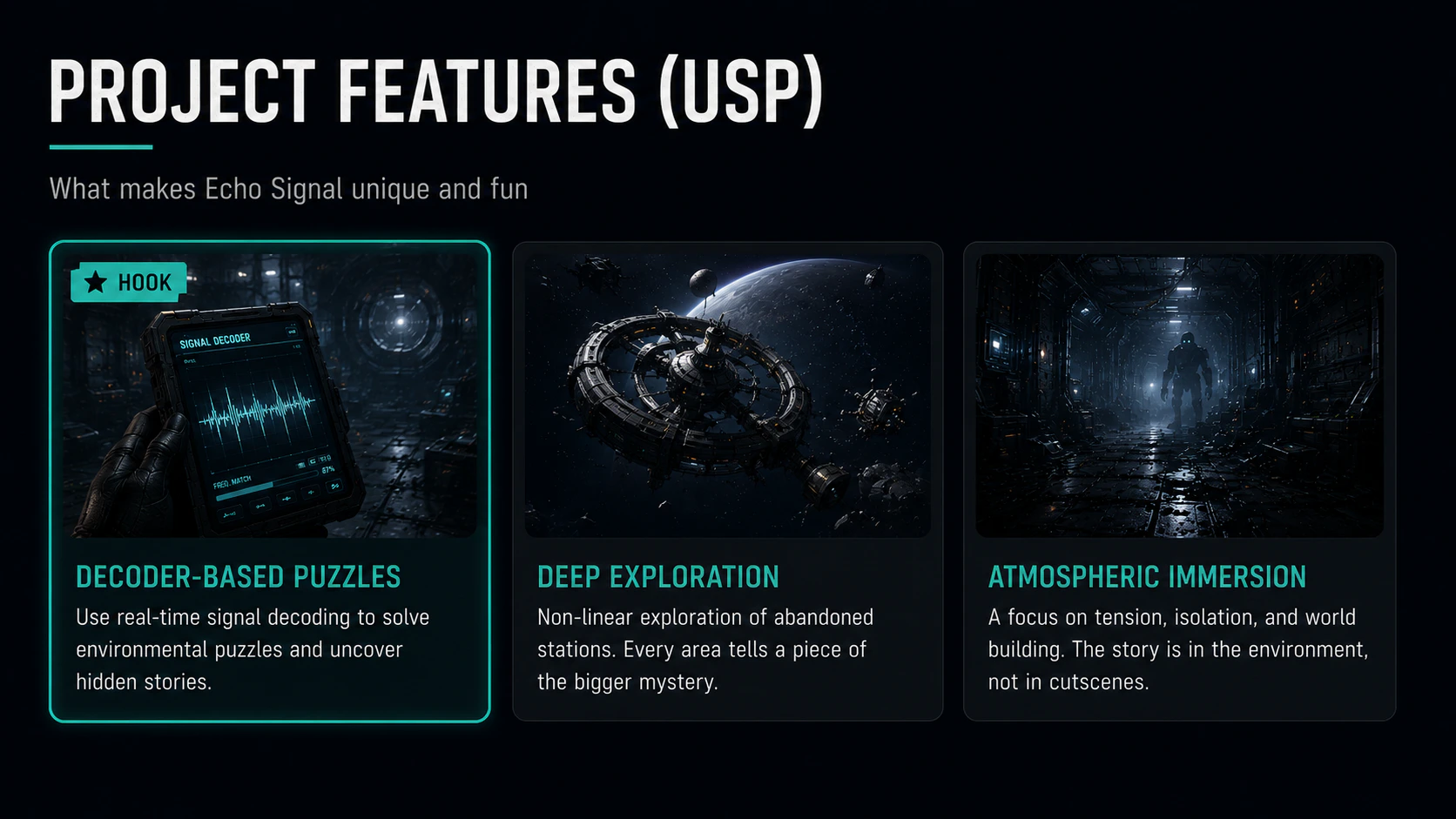
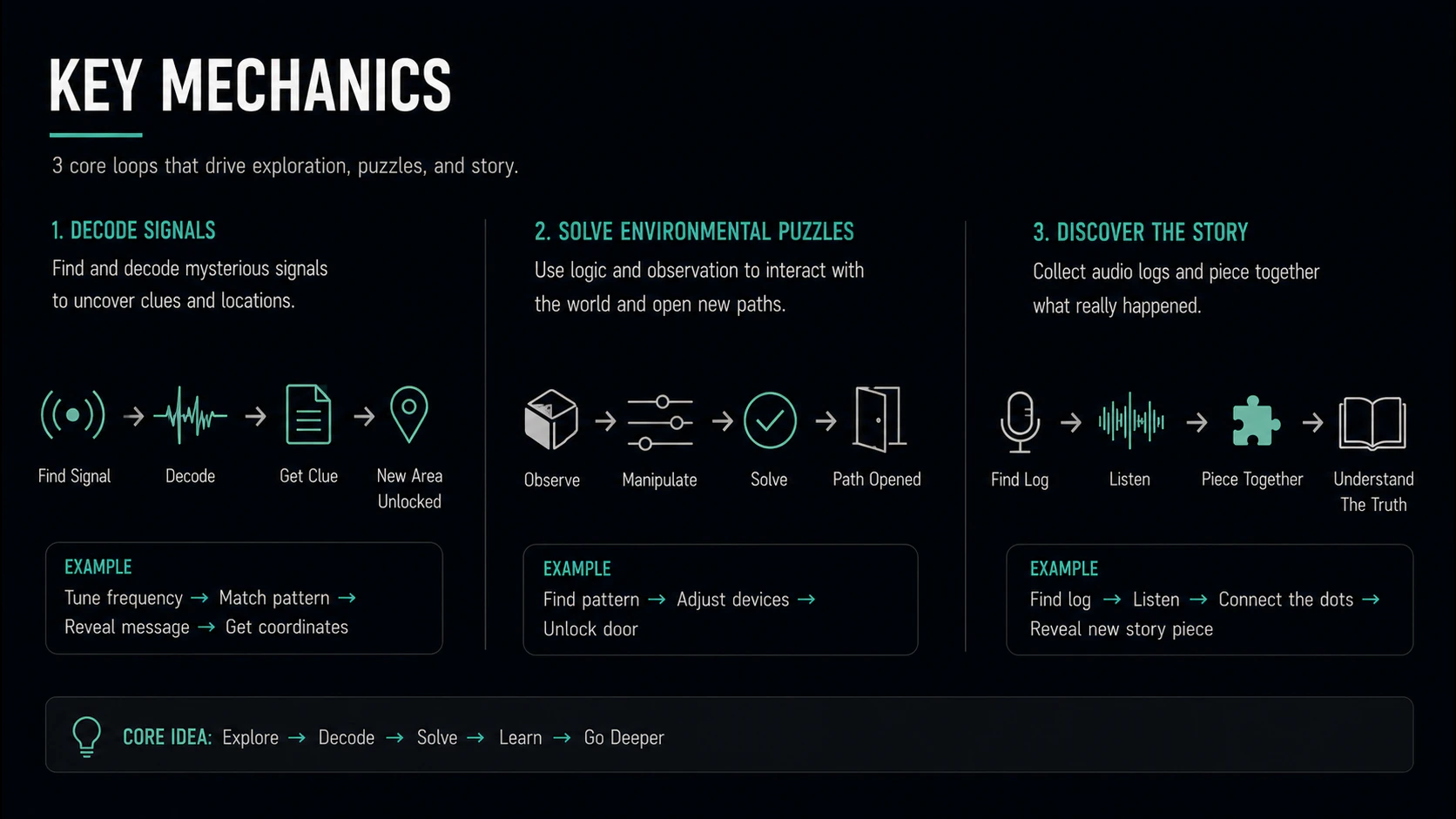
6. Key mechanics
This slide matters most to programmers. Whether a given programmer wants to join your team depends on which mechanics need to be implemented and how interesting they are to them. It’s best to describe each mechanic on its own slide. What to include:- A description of the key mechanics that need to be implemented in the project
- References (screenshots, video, GIF animations) illustrating this or a similar mechanic
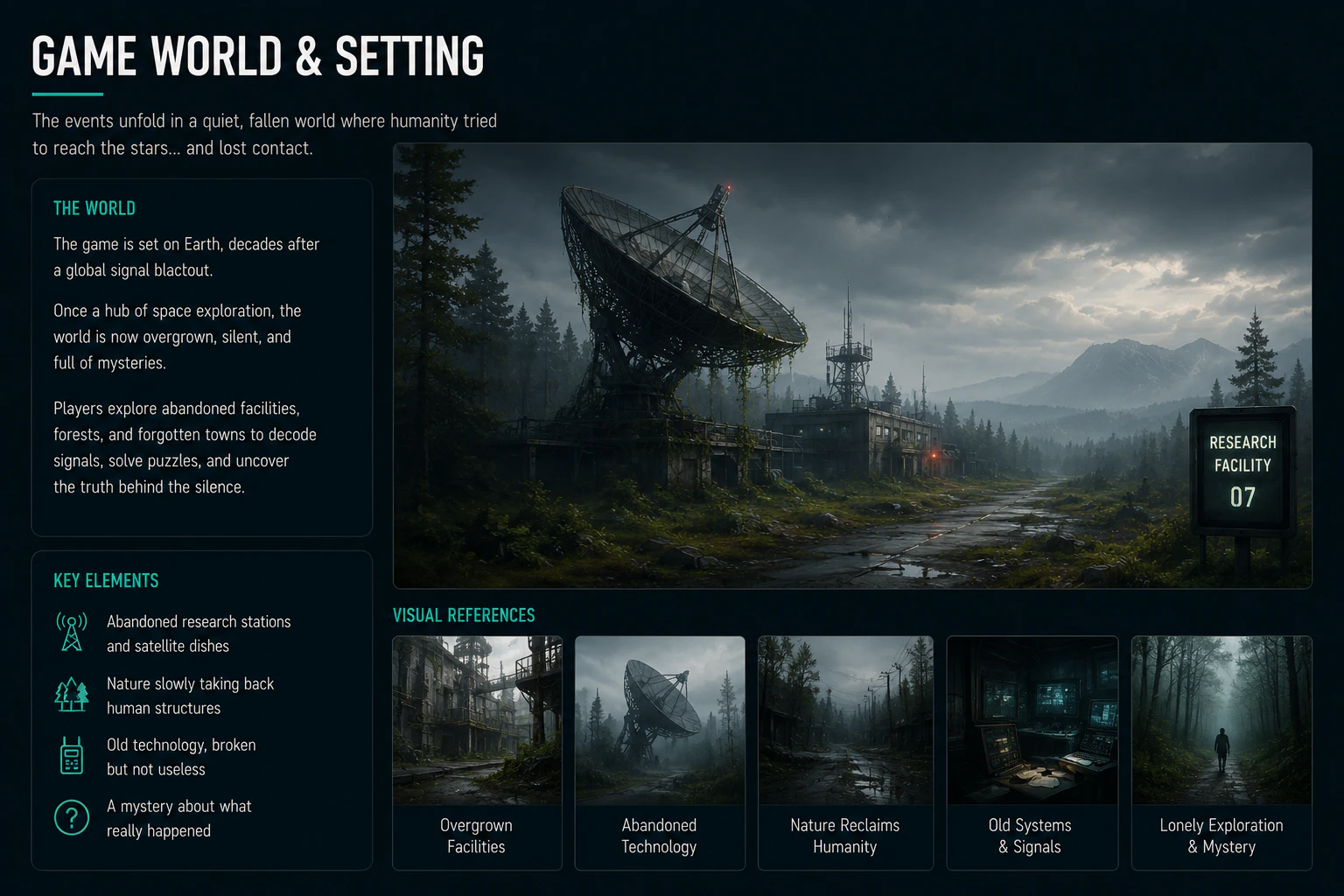
7. Game world and setting
Here you describe where the events of the game take place. This slide matters to all artists, animators, and composers. What to include:- A description of the world in which the game’s events unfold
- Images / references that help visualize the game world
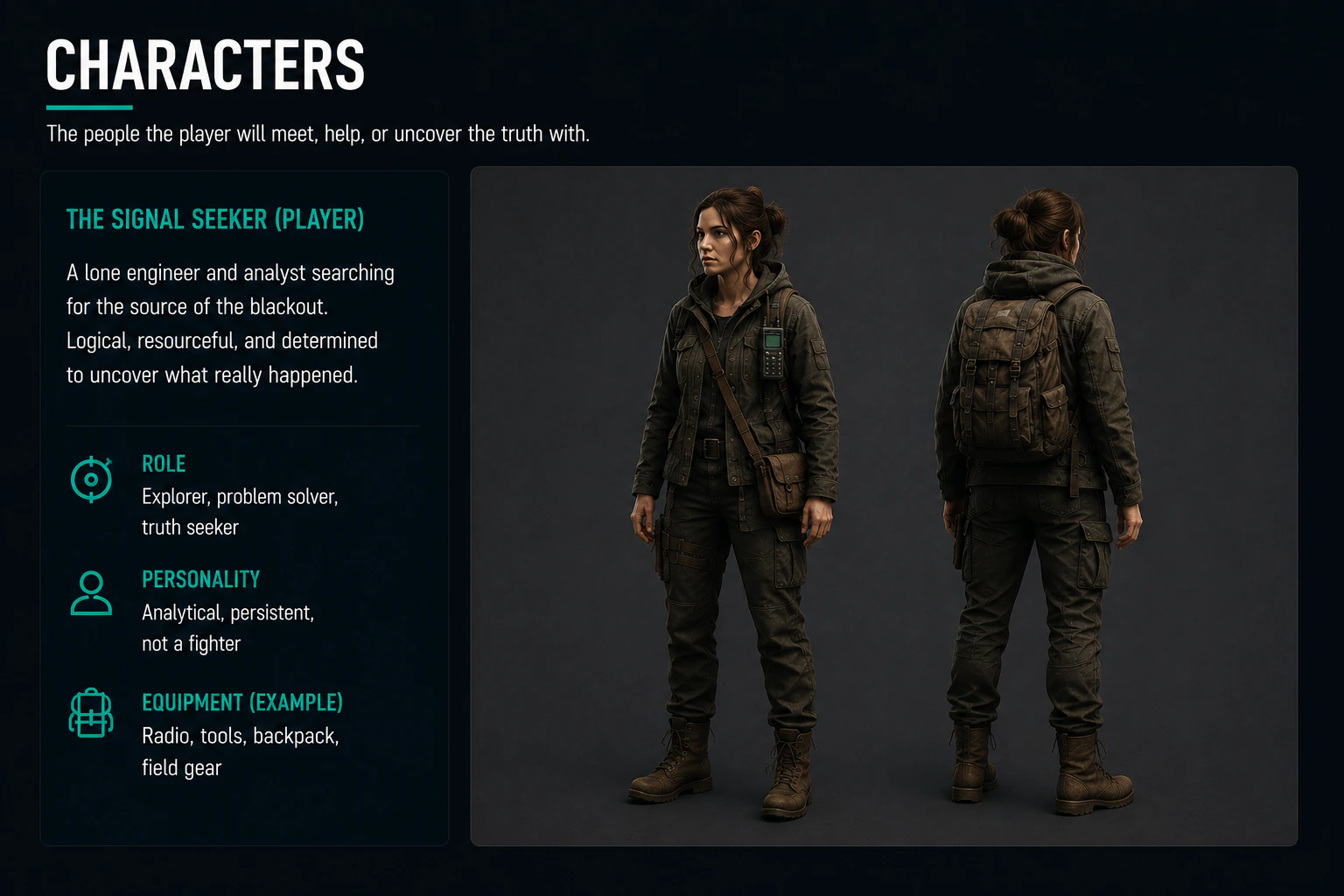
8. Characters
Describe the characters that will need to be created. This slide matters to all artists, animators, and composers. It’s best to describe each character or character type on its own slide. What to include:- A description of the character or character type.
- A reference.
9. Roadmap and plans
What you plan to accomplish in the near term, and where the project is headed. Show the milestones you want to reach — this helps specialists understand what they’d be signing up for and how their work fits into the bigger picture.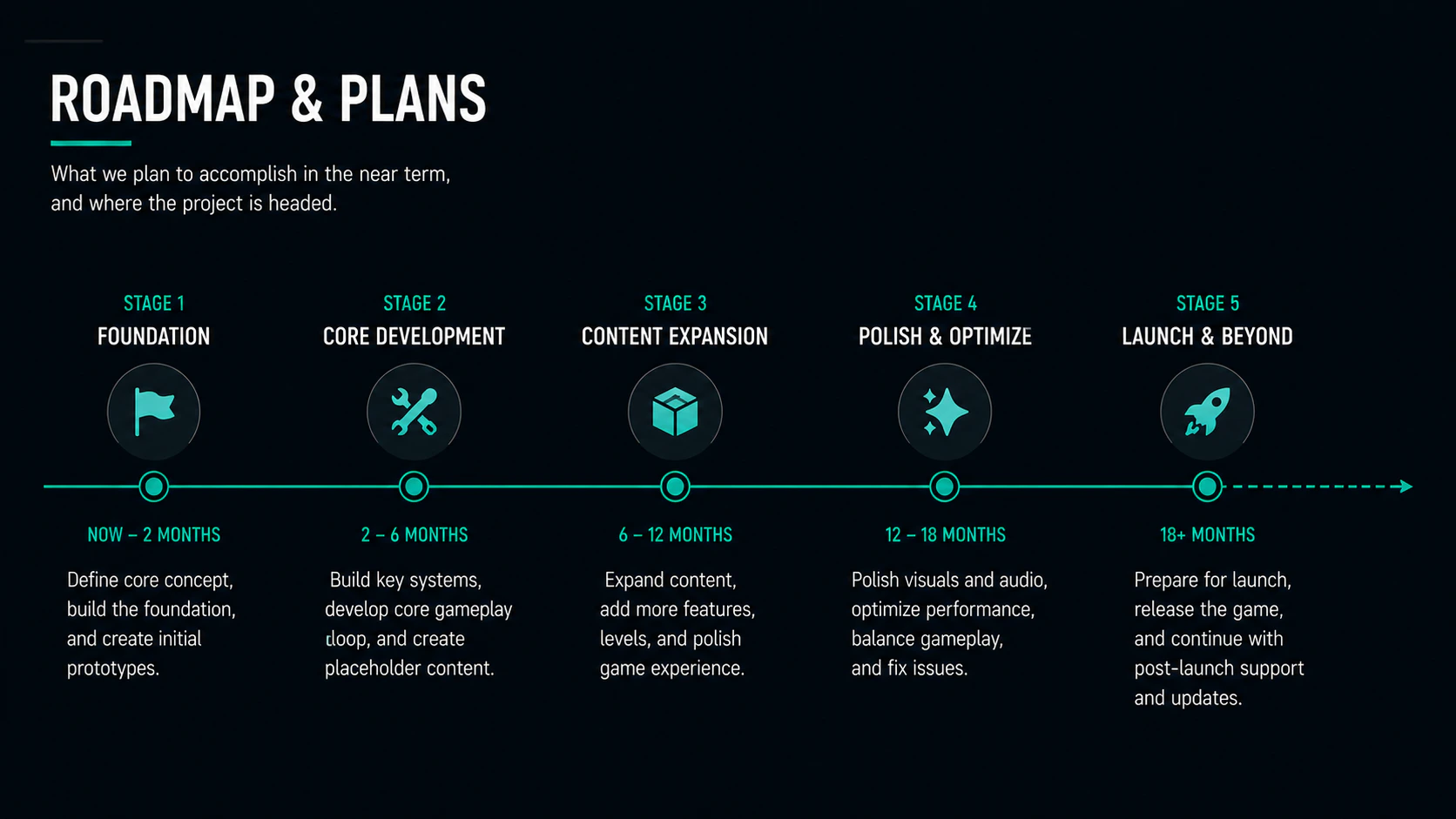
10. Who you’re looking for
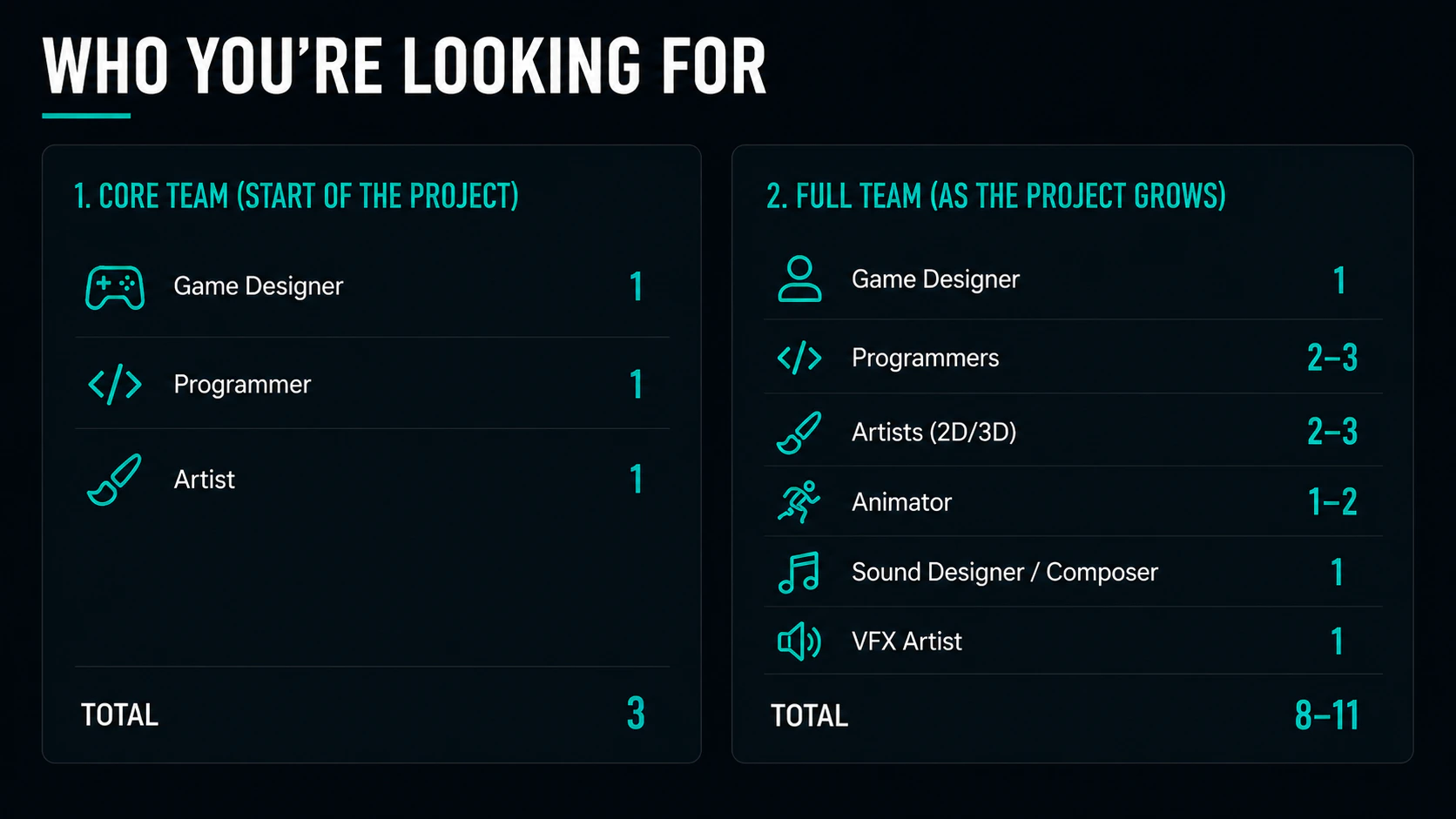
In the early stage of development, you usually need a small team. Later, as you need more content, you will need to expand it. That’s why we list two groups. What to include:- The specialists (and how many of each) you need at the start of the project. Typically this is the game designer, a programmer, and an artist. However, every project is unique and has its own specifics.
- The specialists (and how many of each) needed to realize the full vision — these can join as work on the project progresses.